


In this quarterly series, we will analyze important legislation that has recently become law, as well as future legislation to keep an eye out for. We will also go in-depth on particular laws that deserve more attention. This month, those bills are the 21st Century ROAD to Housing Act (H.R.6644), a bipartisan housing and development reform, and the SAVE America Act, Trump’s bid to gut voting rights and steal the Midterm elections, which has yet to become law. We will briefly describe each of the passed laws and discuss why Congress is so slow and seemingly always in recess. DSA’s incoming Congressional bench will need to leverage proactive strategy in order to navigate the gridlocked landscape of the American federal government.
Bills Become Law
In the months of June through August, a grand total of seven pieces of legislation passed through both chambers of Congress and were signed into law by the President. S.1003, “Lulu’s Law,” permits broadcasting wireless emergency alerts in the event of shark attacks. S.254, the “ARTIST Act,” loosens regulations on producing ivory products by Alaskan Natives. H.R.3490 tasks the Government Accountability Office with starting an impact study on esophageal cancer and related healthcare spending for federal employees and retirees diagnosed with such cancer under the Federal Employees Health Benefits Program (FEHBP). S.2393 allows the Department of Veterans Affairs to carry out major medical facility projects in St. Louis during FY2026. Finally, S.629 expands relief eligibility for agricultural producers and owners of forest land impacted by natural disasters.
S.2, the “Secure America Act” authorizes an additional $70 billion in funding for the Department of Homeland Security. This law further grants means and funds for hiring and training additional Immigration and Customs Enforcement (ICE) Agents. This comes on the coattails of the Republican Party and Trump administration's program of mass deportation and domestic terrorism. And with the recent Supreme Court ruling that Temporary Protective Status for Haitian and Syrian refugees can be revoked, we should expect an increase in ICE terror in the coming year.
Hardly Working
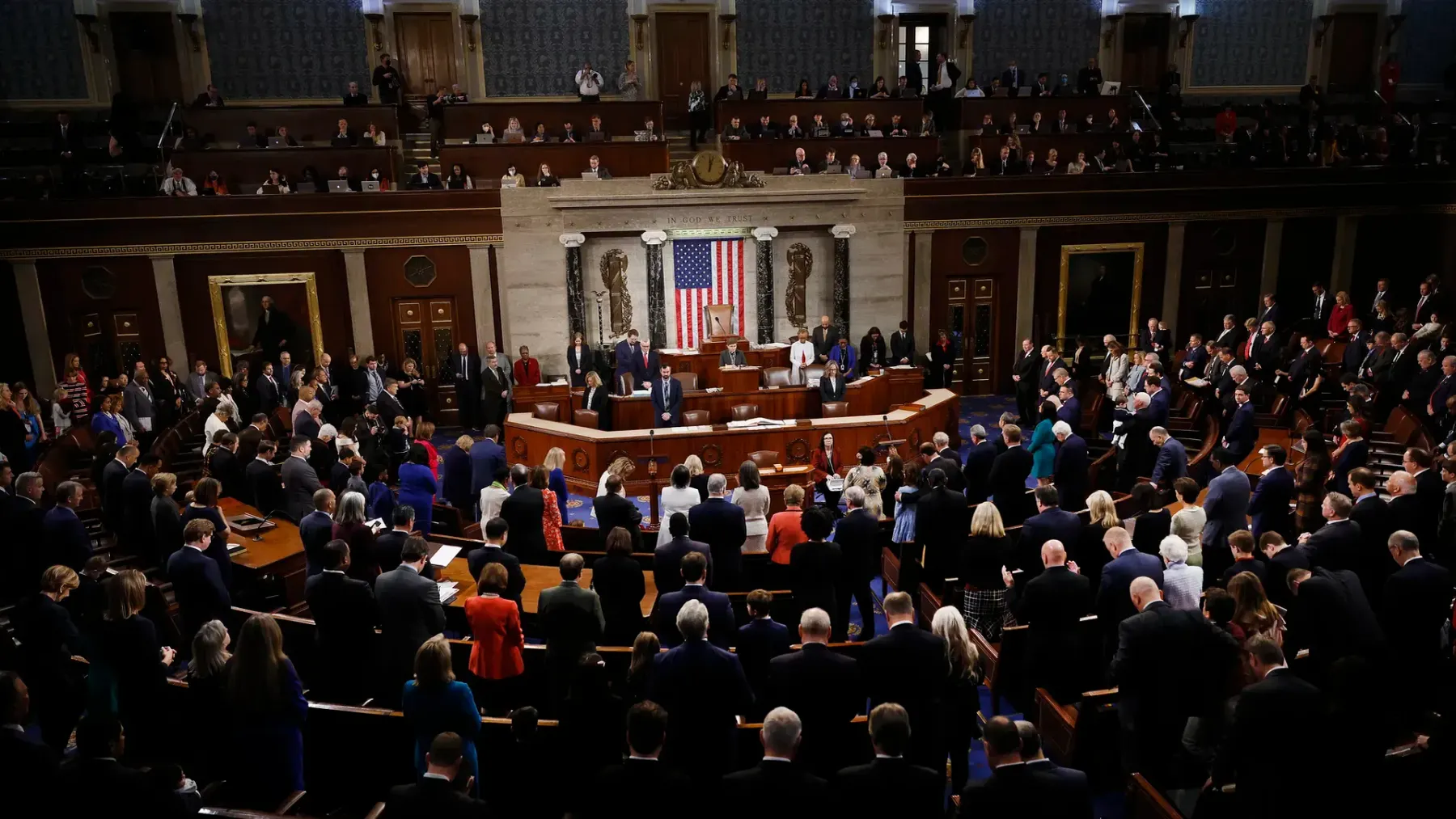
First we must explain why only seven laws were passed throughout the entire season. Congress takes two extended breaks during the summer, but this does not tell the whole story. Even taking recesses into account, we would still expect legislation to keep pace with previous sessions. Yet, the current Congress has been one of the slowest on record. When Republicans had a full trifecta during the 115th Congress, they produced 329 bills that became law. In the current 119th Congress, by comparison, Republicans have only legislated 106 bills into law.
There are a number of reasons for this ineffectiveness. First, the power of the executive branch since Franklin Delano Roosevelt (FDR) has increased dramatically. This means more executive orders. Second, Congress’s bicameral structure increases the time it takes for a bill to become law and the likelihood it will fail. Even if one of the chambers agrees unanimously on a bill, the other chamber can effectively enforce a veto. Third, internal strife within the traditional political parties—particularly within the Republican Party—has given a small minority control over all legislative actions. As some may remember, at the start of the 118th Congress the House Speaker election went on for 15 ballots before Kevin McCarthy was elected by a slim majority. McCarthy was then unceremoniously retired in October 2023, and his successor, Mike Johnson, was elected after four ballots. The election of a Speaker has not been so contentious since 1923, when the election took a total of nine ballots.
If the Democrats take control of the legislative branch in 2029, they will face the same issues. Because gridlock is the norm, we should expect severe limitations for the prospects of our DSA cadre members and authentic progressives to enact their legislative goals. All elected socialists should understand how our constitutional system works. We should also consider how Socialists in Office (SIOs) might navigate a political system where inaction is the norm.
21st Century ROAD to Housing Act
The price of a new home has hit an all-time high. Property sales are slowing down. A massive 49% of Adults under 30 are living with their parents. At a time like this, one would expect our government to have a solution. The Democratic Party establishment has its answer: the YIMBYism pushed by Ezra Klein and Derek Thompson’s “Abundance” project. Guided by the logic of capital, Democrats in “safe” blue states with declining rates of home ownership are pushing for relaxed zoning laws and environmental protections. They want skyscrapers full of apartments, without care that this “solution” exacerbates the gentrification of historic neighborhoods and communities of color. The Democrats are chasing profits.
Congress’s bipartisan solution is the "21st Century ROAD to Housing Act." There are some positive aspects of this law that any socialist should hope to expand upon. First, the law caps the number of housing units that an individual landlord or a housing corporation can own at 350. This is certainly a band-aid, but it provides an answer to a real problem: the more housing units a single lessor controls, the poorer the quality of those units tends to be. Second, the bill’s whole home repairs program allows low- and moderate-income homeowners and small landlords to obtain grants for essential repairs. This program has its origins in the “Whole-Home Repairs” law proposed by DSA Pennsylvania State Senator Nikil Saval.
But the Act also has severe downsides. First, it exempts infill housing developments (housing built on empty lots) from federal environmental review requirements, increasing the likelihood that a development will harm the surrounding ecosystem and community. Second, the law cuts federal funding for construction projects after a certain period of time. This means that the construction of new housing units will need to be faster. With tighter deadlines to construct new units, bosses will hound their workers and increase the likelihood of a workplace accident. These tight deadlines will put workers at risk and damage the quality of their work.
Socialists do not believe that building new housing should come at the expense of environmental regulation, safe building standards, and tenant control in order to further subsidize landlordism. As DSA’s recent Workers Deserve More program states, we in DSA advocate for housing as a human right, public ownership of social housing, strict regulation of investment properties, universal rent control, and guaranteed right to counsel for all tenants, in addition to the strengthening of tenant unions.
Trump’s Pursuit of the SAVE America Act
Trump is determined to pass the "SAVE America Act." He hasn’t faced any real hurdles in the House, where Republicans—having already passed the previous version of this bill, the SAVE Act—appear sympathetic. But he faces issues in the Senate.
Trump’s two main obstacles are the filibuster and Republican dissenters. The dissenters seem to be the usual bunch, including Senator Susan Collins of Maine, Senators Lisa Murkowski and Dan Sullivan of Alaska, and Senator Jon Husted of Ohio (an unexpected addition). Their ideological motivations for dissent may vary, but for the most part (except Murkowski), they each face competitive elections in November. They are trying to save their political careers. But the filibuster is the real issue for Trump. Senate Majority Leader John Thune firmly believes he doesn’t have the 51 votes needed to activate the “nuclear option” and end the filibuster. As of the first week of August, the Save America Act has stalled in the Senate.
Why is it so important for Trump to pass the SAVE America Act as soon as possible? The answer is simple: Republicans want to steal elections, including the upcoming midterms. If it becomes law, it would be the greatest attack on voting rights since the introduction of Jim Crow laws in the South. Its draconian features would disenfranchise an astounding number of people, particularly affecting Black and minority communities’ ability to vote.
First, the SAVE Act would create a de facto poll tax. Henceforth, all voters would need to present a valid form of identification, such as a passport or driver’s license. Only people who can pay for and obtain an ID would be able to vote. Document fees are expensive. It costs at least $165 to apply for a valid passport, not to mention the time and labor needed to pass through other bureaucratic hoops. Married women with a new last name, college students living out of state, and transgender people would all need to update their forms of identification in order to be able to vote.
The SAVE Act would also require that states hand over their voter rolls to the Department of Homeland Security so that it can run information through its citizenship verification tool. It would also end universal mail-in voting, limiting suffrage in up to eight states and the District of Columbia. As Trump's campaign against voting rights heats up, the undemocratic features of our political system appear in starker relief. Socialists will need to take the lead to protect and expand the limited political rights granted to workers in the United States.
Workers Deserve More
DSA’s new program offers various alternatives to some of the legislation presented in this piece, including alternative solutions to the affordable housing crisis; the protection of immigrants’ rights; the expansion, protection, and extension of voting rights in general and for all permanent US residents and incarcerated people. Most importantly, the program presents a blueprint for an entirely new constitutional system.
Without Workers Deserve More as a minimum program, our incoming Socialists in Office (SIOs) will be left out in the wilderness and without a concrete basis from which to advocate for the emancipation of the working class. The minimum program is what will help our SIOs articulate demands for the betterment of workers. But we must remember: The working class as a whole must be at the vanguard of the struggle for democracy and socialism, not only our elected officials. As Marx and Engels once said, “The emancipation of the working class must be the work of the working class itself.” Our presence in Congress is a necessary but insufficient beachhead for a wholesale assault on our existing system of government.
Liked what you read? Subscribe to stay plugged in.